Stop doing the math
in your head.
BlastBid has the media consumption rates, production rates, and markup math already built in. Pick the job type, enter the surface area, set the coating condition. You get a number in about 60 seconds, and that number is based on real data instead of gut feel.
Works on your phone, works without signal, and the customer can have a PDF before you leave their driveway.
- Media types
- 10
- Coating conditions
- 4
- Surface complexities
- 4
- Job types with presets
- 5
- Signal needed
- None
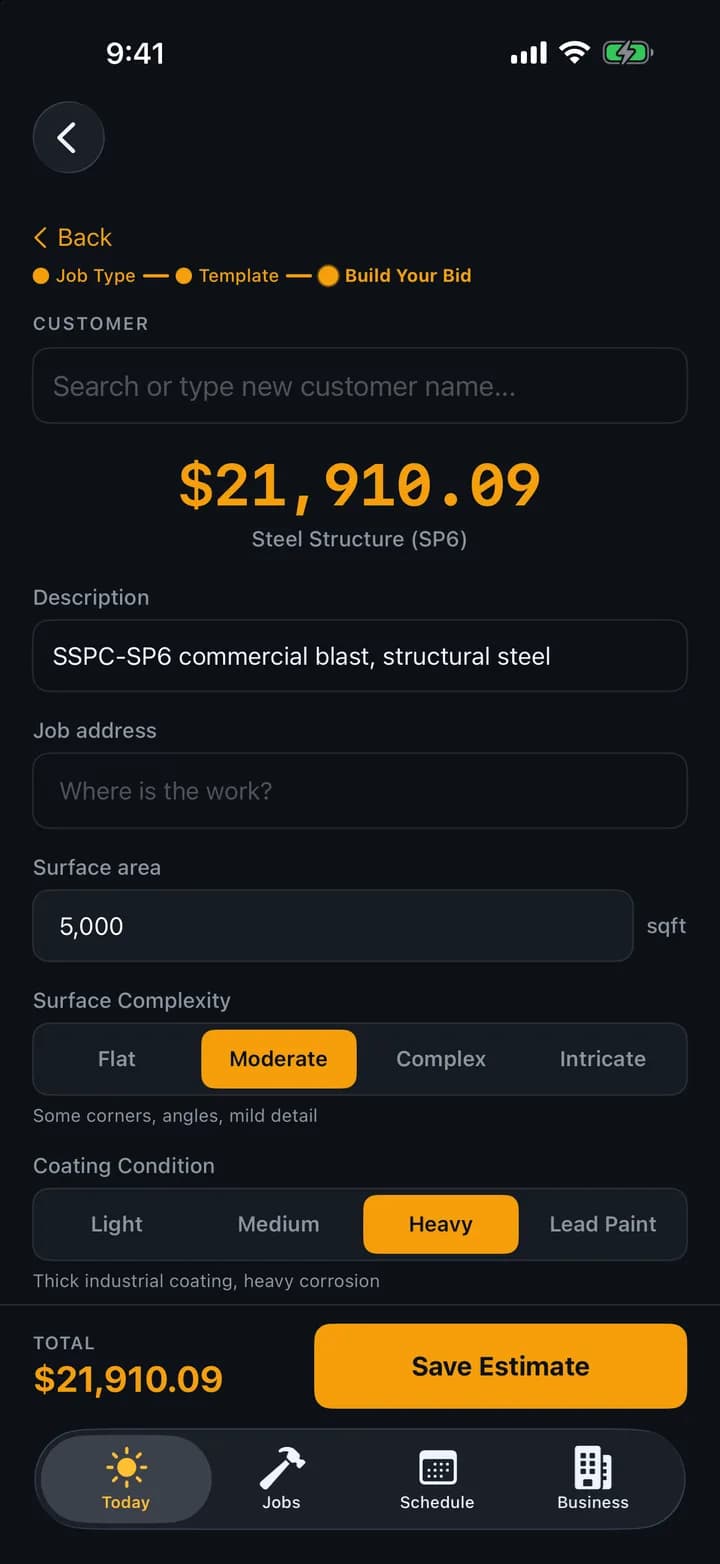
How a BlastBid estimate works
Four inputs. The rest is math you don't have to do.
- 01
Pick a job type
Auto, residential, marine, commercial, or industrial. Each one pre-loads the media, coating condition, and complexity that make sense for that kind of work. Change anything you want.
- 02
Enter the surface area
Square footage. If you don't know it, the free sqft calculator handles pipes, tanks, beams, and flat surfaces.
- 03
Set the media and coating
10 media types, 4 coating conditions (light through lead paint), 4 complexity levels. BlastBid pulls the right consumption and production rates for that combination.
- 04
Review the number
Media pounds, media cost, labor hours, labor cost, travel, markup. All recalculated live. Adjust the markup, change the media price, swap the coating. The total updates as you type.
The rates are already in it
You don't have to look up how many pounds of garnet it takes to strip heavy coating off a tank, or how many square feet per hour a blaster moves on complex geometry. BlastBid already knows.
Media consumption rates
- Crushed glass, coal slag, garnet, aluminum oxide
- Glass bead, recycled glass, walnut shell, plastic media
- Steel grit, silicon carbide
- Rates vary by media type and coating condition
- Light, medium, heavy, and lead paint categories
Production rates
- Flat, moderate, complex, intricate surface types
- Rates adjust for coating condition automatically
- Heavy lead paint on intricate steel is slow. BlastBid knows that
- Light rust on flat panels is fast. It knows that too
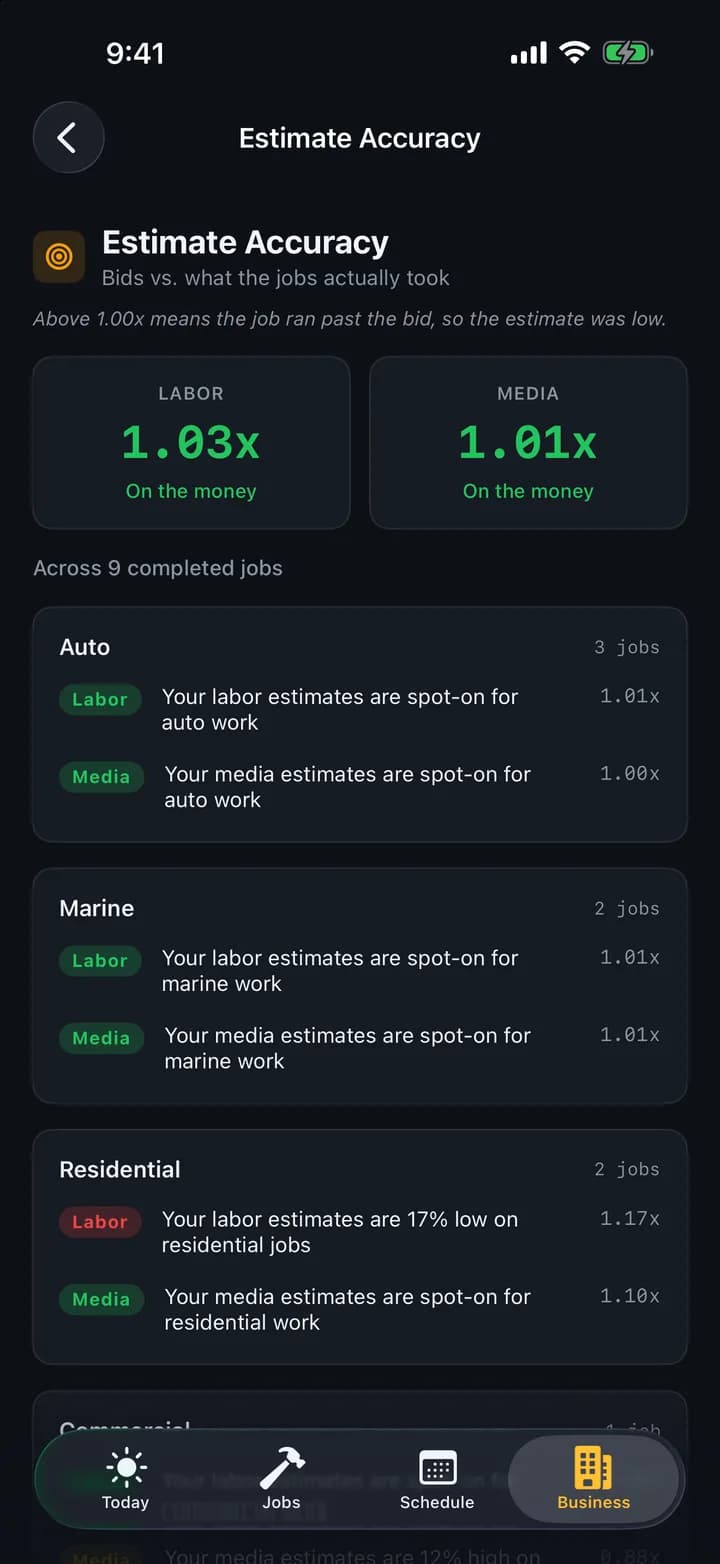
- Estimated vs actual tracking on completed jobs
Consistent bids, fewer surprises
Most blasters have the rates in their head. The problem is those rates shift depending on the day, the mood, and how badly you want the job. One week you're tight, the next week you leave money on the table.
BlastBid doesn't replace your judgment. You still set the markup, you still override anything you want. It just gives you a consistent starting point so the math doesn't change because you were tired on a Friday.
After the job is done, you enter actual hours and media used. BlastBid compares them to the estimate so you can see where you're pricing too high, where you're leaving money behind, and what to adjust next time.
Common questions
How long does it take to build a sandblasting estimate in BlastBid?
About 60 seconds. You pick a job type, enter the surface area, and set the media and coating condition. BlastBid does the media, labor, travel, and markup math for you and recalculates the total live as you adjust anything.
What media types and coating conditions does it cover?
Ten media types including crushed glass, coal slag, garnet, aluminum oxide, glass bead, recycled glass, walnut shell, plastic media, steel grit, and silicon carbide. Coating condition ranges across light, medium, heavy, and lead paint, with four complexity levels from flat to intricate.
Can I override the calculated price?
Yes. BlastBid gives you a consistent starting point, not a locked number. You set the markup and can override the media price, labor rate, travel fee, or any line item. Your judgment still runs the bid.
Does the estimating engine work offline?
Yes. All the consumption and production rates live on the device, so estimates calculate instantly with zero signal and sync when you are back in range.
Can I see how my estimates compared to the actual job?
Yes. After a job is done you enter actual hours and media used, and BlastBid compares them to the estimate so you can see where you are pricing too high or leaving money behind.